Khaled Hosseini made me fall in love with Afghanistan. His books opened me to its culture and traditions, inviting curiosity about a complex society.
I saw the beauty of its people and the oppression they suffered under Taliban rule. I longed to know someone living through those moments, especially a woman.
While researching Afghanistan’s present situation, I studied women’s lives. I came across several documentaries describing worsening conditions under Taliban rule.
I watched Carrie Patsalis’s documentary. The film presents warmth and hospitality in life. It also acknowledges kindness, culture, and cuisine while noting challenges for women.
What stayed with me most was her introduction to Michelle. Michelle is a 22-year-old woman running her own business.
I was instantly fascinated because I had not known that a young woman could establish and manage a business under the current circumstances in Afghanistan. Her independence felt empowering. Yet this empowerment exists alongside the denial of education to women and girls-a painful and striking paradox.
What does it mean to live between these two extremes? How are women with ambitions, abilities, and dreams continuing to survive, work, and imagine a future while facing so many restrictions?
I immediately searched for Michelle online and reached out to learn more about her life, her work, and how she was managing to move forward. I wanted to understand her story in the hope that her voice might also represent and amplify the voices of many other Afghan women. I also wanted to explore how people outside Afghanistan can support and amplify the voices of young women who continue to show remarkable courage and determination.
I would like to thank Michelle for agreeing to share her story with The Neo Protagonist.
Q1. First, Michelle, please tell us about yourself. Who are you, and what do you do?
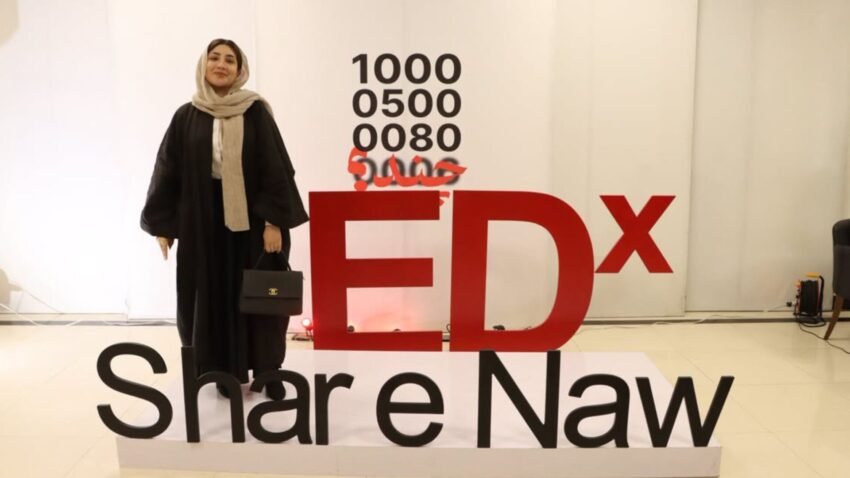
My name is Michelle, and I am 22 years old, born and raised in Afghanistan. At my core, I am someone who refuses to let circumstances dictate the boundaries of my dreams. Professionally, I am an entrepreneur and founder. I run my own business, La Michelle, which focuses on fashion, and I am also involved with Khaima, an initiative close to my heart dedicated to community and empowerment.
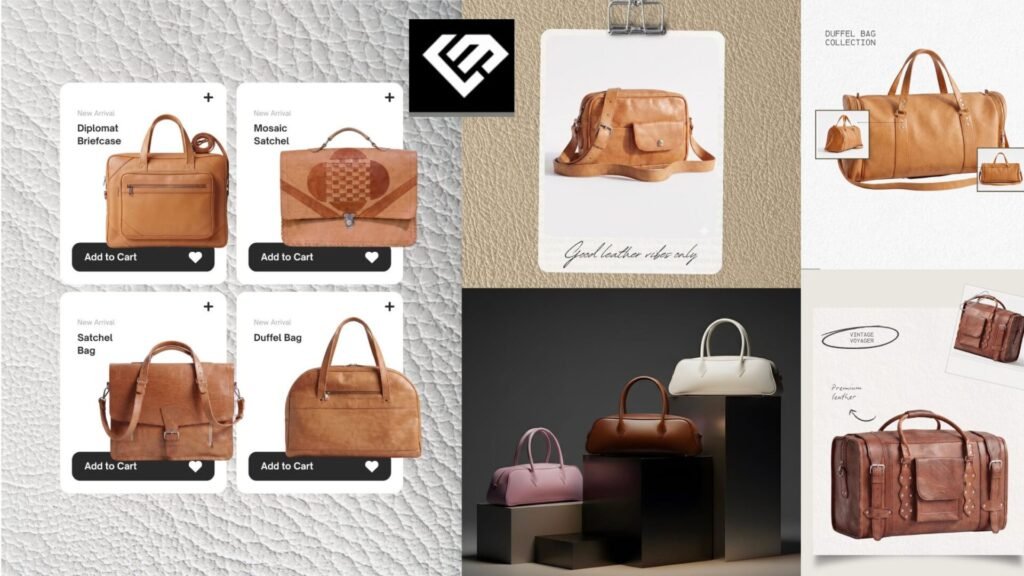
Q2. Tell us about La Michelle. How did it begin? Was it something you had always envisioned? What is your long-term vision for the brand? Where are your products currently available, and how can people in Afghanistan and abroad purchase them?
From early on in life, I was fascinated with fashion and making designs. I was inspired by the big brands overseas and always how fashion could tell a story, how can it evoke emotion and how can it give somebody confidence. In the very beginning, I didn’t want to make pieces that were just for local sale but something that would be necessary to compete on the international shelves, against the international quality and craftsmanship. To combine that global inspiration with the richly woven and traditional art of my own homeland was my greatest dream. The overarching goal of my brand is to conquer physical and cultural barriers; to take Afghan design on to the international stage, and demonstrate the timeless and global appeal of Afghan aesthetics. Presently our products are sold mostly outside Afghanistan via direct order and our online platforms. We arrange international shipping and custom orders for our supporters all over the world.
Q3. Tell us about your other initiative, Khaima. What does the name mean, what inspired the initiative, and what kind of change are you hoping to create through it?
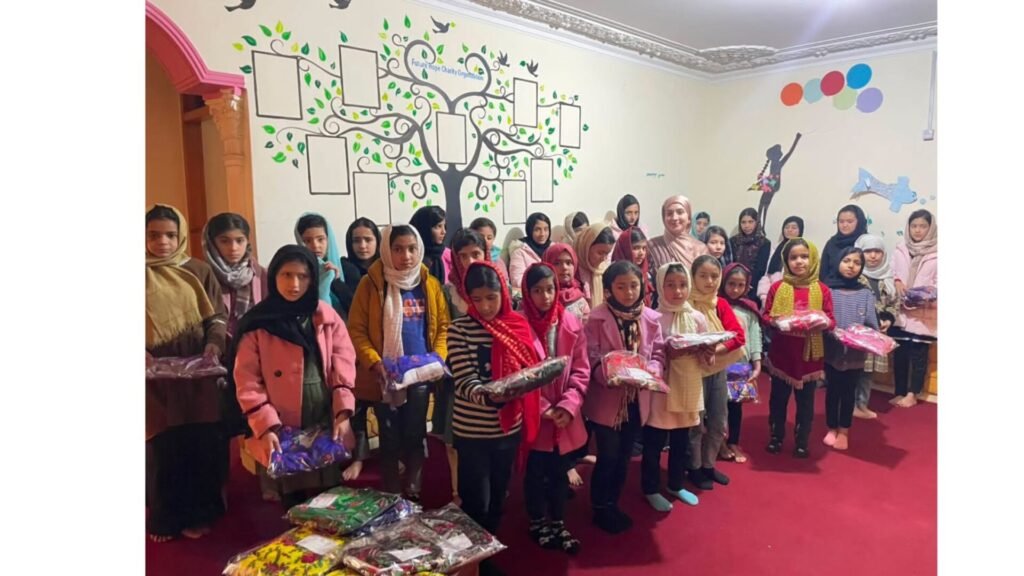
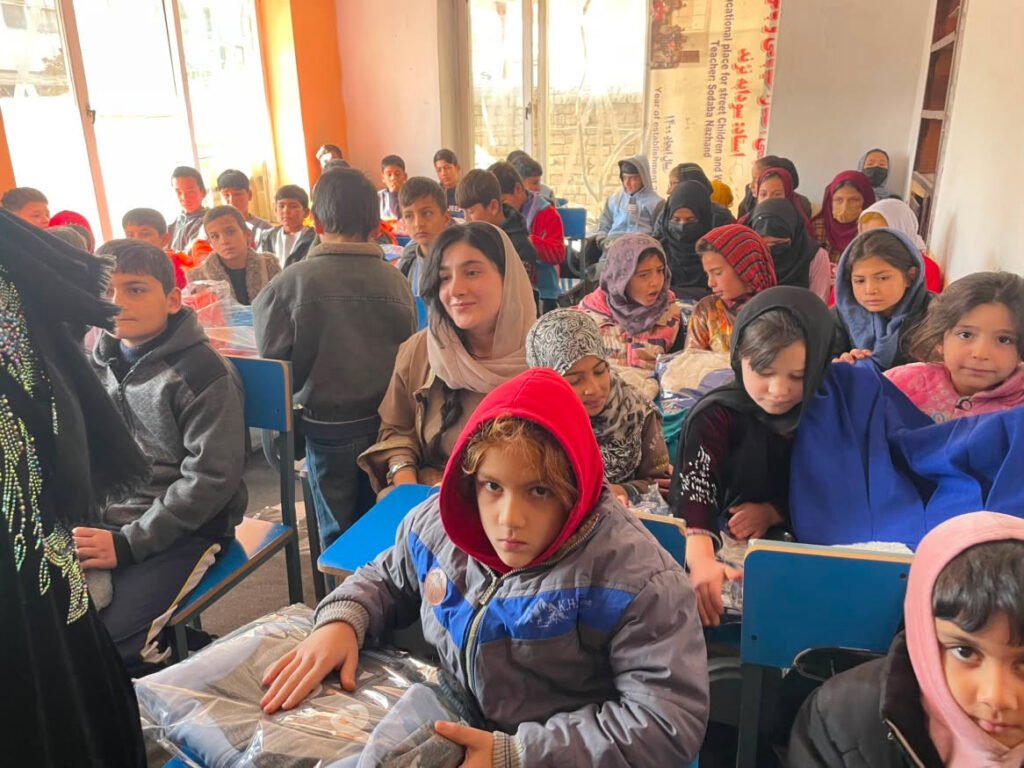
Our Khaima means “Tent” and our Khaima is a shelter that gathers people together under one roof, to provide warmth, safety and community. Khaima was born out of the realization that isolation is one of the greatest burdens we confront at this time. Initially, I began teaching girls in my home; then slowly we expanded to a larger community of people. Different courses for girls and women are offered which are in line with the needs of the modern world in terms of digital requirements. In contrast, this year we were able to collect clothes for the needy, which consisted largely of women and children, during our annual clothes donation camps at the time of winter and eid.
Q4. Tell us about your childhood, teenage years, and transition into adulthood. As you grew up, how did you experience the changes taking place in your country and immediate surroundings?
I have the best childhood memories to the colorful and crowded parks with families and the bright laughter of children playing on swings. Our childhood days had a society that was waiting to learn, construct and reach out to the larger world. School was my second home and University was like the doorway to the limitless future.But as a young adult comes into the world, there is a distracting and sudden change in our immediate environment. When our public areas shrank abruptly, the silent streets upon which parks once bounced with happiness, along with the shut classroom doors to younger girls, it was saddening. However, with all these changes we as their generation did not let our dreams die. This abrupt turn of our lives made us resilient, a resilience that supports us to keep going each and every day.
Q5. What is your most beautiful memory of Afghanistan?
My most beautiful memories are tied to a profound sense of hope and progress. We truly thought that finally our country had developed, our people had developed, and they had become broad-minded. I remember communities openly embracing education, arts, and modern opportunities. That collective belief in our growth and potential remains the most cherished memory I carry with me, a golden era of the mind and spirit that no restriction can ever erase.
Q6. Have you had the opportunity to travel outside Afghanistan? If so, which experience has stayed with you the most? If not, where would you most like to travel, and what would you like to explore there?
Yes, I traveled to a few nearby countries before the regime change, which opened my eyes to the wider world. Right now, the place I most want to visit is Morocco. I want to see how this nation has successfully positioned itself as a global tourism hub.
Q7. Young Afghan women who run businesses may have had very different educational and social opportunities. What kinds of businesses are women currently able to establish in Afghanistan? Are there particular restrictions, industries, or professions that remain difficult or inaccessible to women? For instance, beauty salons have reportedly faced closures and restrictions.
Afghan women are remarkably skillful. Right now, successful women-led businesses are primarily concentrated in sectors that can be operated from home, such as tailoring, handicraft production, online food delivery, small-scale farming, and boutique e-commerce.
The closure of beauty salons, which were vital hubs of financial independence and community for thousands of women, was a devastating blow. High-public visibility jobs are still severely limited or prohibited, such as those in the formal corporate leadership, public administration, or media field.
Q8. Girls and women are currently facing severe restrictions on secondary and university education. Are alternatives such as private tutoring, online learning, informal study groups, or women-only educational spaces available? How have these restrictions affected you personally, and how are you continuing to learn and grow?
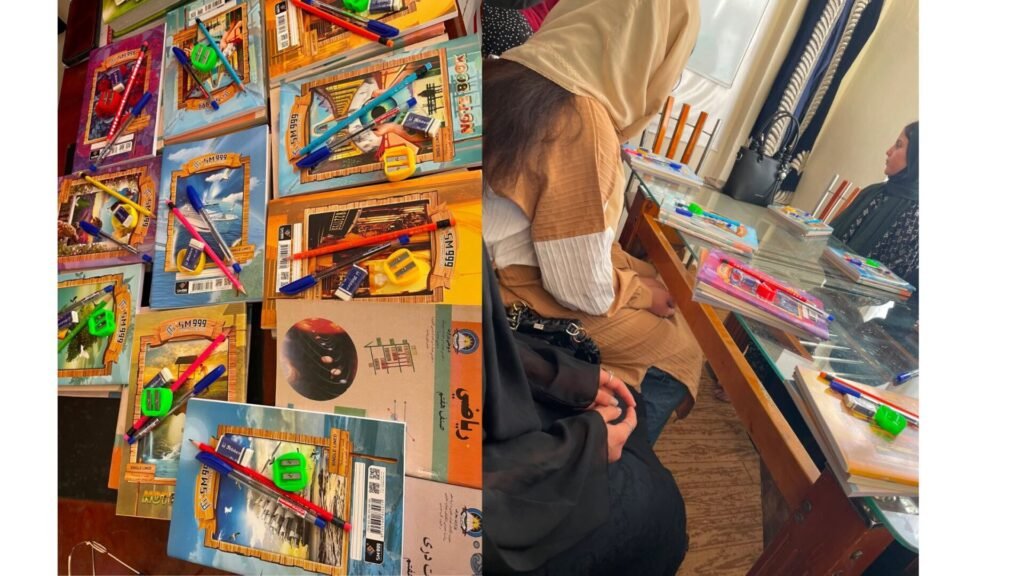
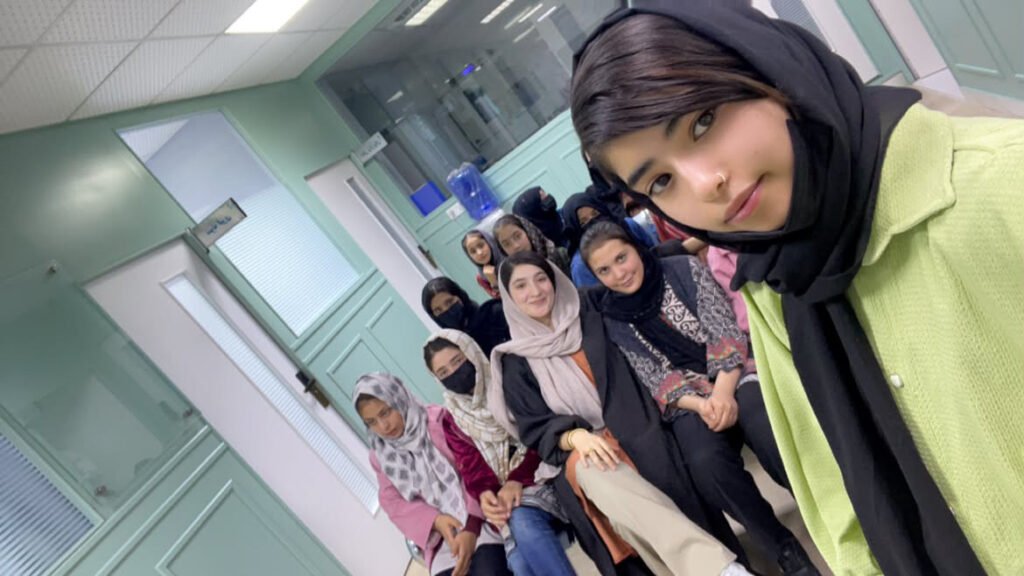
When formal doors close, underground windows open. Informal underground study circles, private home tutoring, and digital self-education have become lifelines for girls determined not to let their minds go to sleep. We at Khaima also provide courses and make sure they now have access to education and finally guiding them to financial stability.
Personally, the restrictions served as a wake-up call that knowledge cannot be locked away by decree. I continue to learn every single day through online courses, reading, and treating every challenge as a practical masterclass in resilience.
Q9. There have also been reports and concerns about policies that may increase the vulnerability of girls to early or forced marriage. How are such developments discussed among women in your community and social circle?
It is a topic heavy with grief. When education and economic prospects are stripped away from young girls, some families tragically view early marriage as a desperate economic survival mechanism or an inevitability. Among my friends and peers, we talk about this with a heartbreak. We try to fight it by proving that a daughter can be an economic pillar and a source of pride for her family, working to change mentalities from within our communities one conversation at a time.
Q10. How different is life for financially privileged Afghan women compared with women from less privileged backgrounds? Do wealth and social connections provide meaningful protection or access to opportunities?
Privilege offers a buffer, but it is not an absolute shield. Wealthier families may afford private tutors, better internet access for online learning, or the means to establish businesses with less initial friction. However, the overarching social restrictions apply to women across all economic groups. A wealthy woman may live in a more comfortable home, but she faces the same psychological confinement and systemic limitations on her public freedom as anyone else.
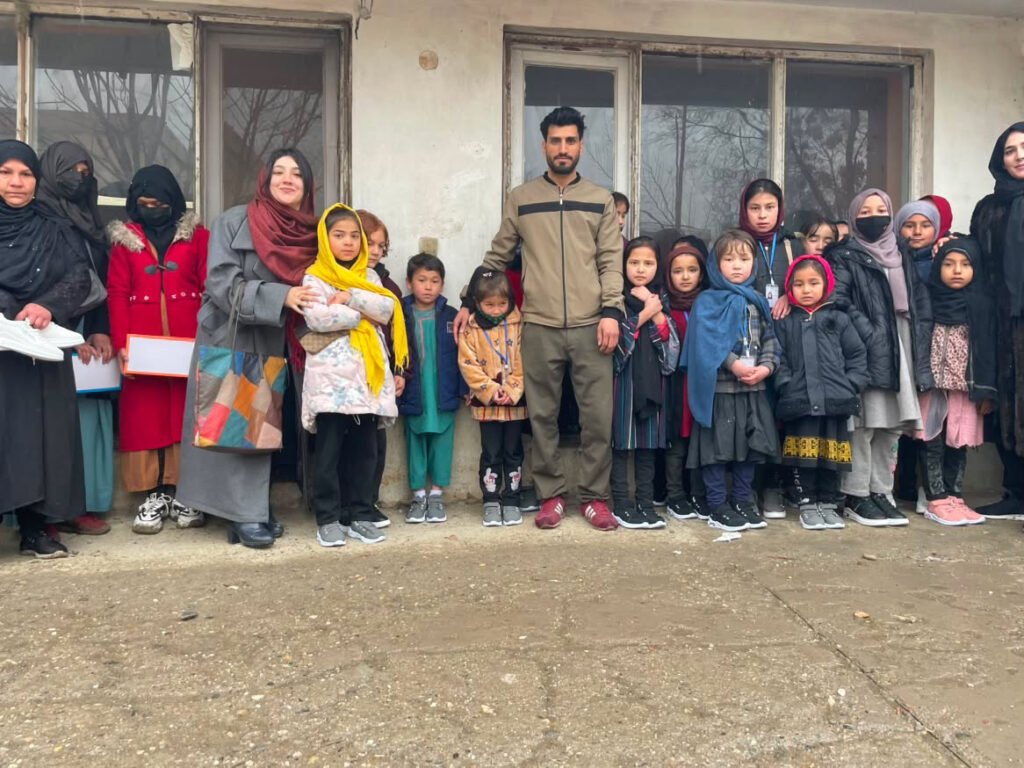
Q11. Men in Carrie’s documentary often appeared warm, respectful, and welcoming. International portrayals can sometimes create the impression that most Afghan men share the same patriarchal views, even though Afghan literature and personal accounts reveal a much more complex reality. How are progressive and open-minded Afghan men responding to the present situation? Are there quiet ways in which they support women or challenge restrictive norms within their families and communities?
The reality is far more deeper than media headlines suggest. Many fathers, brothers, husbands, and sons are deeply pained by what their sisters and daughters are going through. Progressive men are supporting us in crucial, quiet ways, acting as legal guardians for our business licenses, protecting our home study circles, driving us safely to where we need to go, and standing up against conservative pressures within extended families. True change in Afghanistan will require these brave allies walking shoulder by shoulder with women.
Q12. Suppose Afghanistan offered the same freedoms, security, educational opportunities, and public amenities as a highly developed country. How differently do you think you would be living today? Would you have chosen a different career or followed another ambition?
If the playing field were entirely open and secure, I think the core of who I am would remain the same, I would still be an entrepreneur and a creator. But the scale of my dreams would be multiplied a thousand times over. Instead of managing hurdles daily, I would be scaling La Michelle internationally, opening physical flagship stores across major world capitals, and perhaps studying international business or design at a global university.
Q13. Afghanistan is increasingly being presented as a tourism destination, and several international travellers and vloggers have recently visited the country. At the same time, many people remain concerned about safety, particularly women travellers. What should prospective visitors realistically understand before travelling? Which places or cultural experiences would you recommend?
Prospective visitors must understand that Afghanistan is a country of profound contrasts. The sociopolitical environment is complex, highly sensitive, and unpredictable, especially for women travelers, who must strictly cope to local cultural dress codes and behavioral norms.
For those who do visit with proper preparation, the historical beauty is unmatched. I would recommend experiencing the Shrine of Hazrat Ali in Mazar-e-Sharif, Band-e-Amir in Bamiyan, and spice-scented alleyways of the old bazaars in Kabul.
Q14. Which Afghan dishes, desserts, or drinks would you recommend to someone discovering Afghan cuisine for the first time?
You cannot truly understand Afghan culture until you have shared a plate of Kabuli Pulao. Mantu is my favorite. To drink, nothing beats traditional Chai (green or black cardamom tea) served alongside fresh sweets.
Q15. Which Afghan films, or films about Afghanistan, would you recommend? You may also suggest Afghan musicians, songs, or traditional forms of music that people should explore.
I recommend The Breadwinner, an animated film that captures the quiet strength of an Afghan girl. For music, exploring the timeless melodies of legendary artists like Ahmad Zahir, often called the Elvis of Afghanistan. Traditional Rubab music, played on our national instrument.
Q16. What are some of your favorite books and films of all time, whether Afghan or international?
One of my all-time favorite books is The Kite Runner by Khaled Hosseini. The 40 Rules of Love by Elif Shafak and the Alchemist by Paulo Coelho.
Q17. If you could have one superpower, what would it be, and how would you use it?
I want to read minds! Honestly, it would be the ultimate shortcut. I would use it to instantly know what people truly think/want.
Q18. Where do you see yourself, La Michelle, and Khaima ten years from now?
Ten years from now, I see myself as a global entrepreneur who never forgot her roots. I envision La Michelle as an internationally recognized brand representing the pinnacle of Afghan craftsmanship on the world stage. I see Khaima growing from a local support network into a thriving foundation that has successfully educated, empowered, and employed thousands of young women across the region.
Q19. What message would you like to share with the women and girls of Afghanistan?
Do not be told that your voice has been taken off. A single candle can light a room even in the darkest of rooms. Continue to learn, continue to encourage each other secretly and openly, and fiercely defend your dreams! You don’t exist as a footnote in history, you are the narrators for tomorrow’s history.
Q20. Finally, what message would you like to share with the wider world? How can individuals and organisations meaningfully support, contribute to, or volunteer with initiatives such as yours?
Look past the headlines of despair and see our determination. Do not look at Afghan women simply as victims to be pitied, but as resilient changemakers waiting to be backed. Individuals and organizations can support us by amplifying our voices, purchasing from women-led Afghan artisans to sustain our independence, and advocating for digital educational access. When you support an Afghan woman entrepreneur, you are investing in the entire future of a nation.
To conclude,
There are many aspects of Afghan life that are familiar to us, much like life in any other place or culture. Yet there are also realities that stand in stark contrast to those of most modern societies. Afghanistan continues to suffer in many ways, and its people have learned to live with and endure these hardships. But the toll is heaviest on women. Amidst these circumstances, stories like Michelle’s emerge-stories of resilience, courage, and an unwavering determination to dream.
My personal conversations with Michelle made me feel that she could be like any of my younger cousins: a young woman with a mind of her own, a spirit of her own, and dreams that simply need wings. I wish and pray that she finds the freedom and opportunity to reach great heights. I hope this article reaches more and more people, especially those who have the privilege, influence, and means to make a meaningful difference.
I once asked Michelle if they have cinema halls there. She told me there are none, and that even when there were, women were not allowed to go. She has never been to a cinema hall. I told her that if she ever comes to Dubai, I will definitely take her out for a movie.
As we continue to read and learn more about Afghanistan’s story, her answers leave me wondering: why is it that Afghan women have to pay such a disproportionate price? Wherever rigid, obscurantist dogmas take hold, why are women so often the ones who bear the heaviest burden?
And yet, like everything in life, we continue to seek resolution. We seek peace. We seek justice. And Michelle has certainly continued to pursue these with remarkable consistency and courage. Her voice is one that needs to be heard, supported, and amplified.
And for all Afghan women, she carries an important message:
You don’t exist as a footnote in history, you are the narrators for tomorrow’s history.